Storekeepers & warehouse managers
The stock ledger matches what is on the shelf
Receipts, issues, transfers, stocktakes, lots/serials and reorder points across warehouses — one stock ledger, with cost flowing straight to accounting.
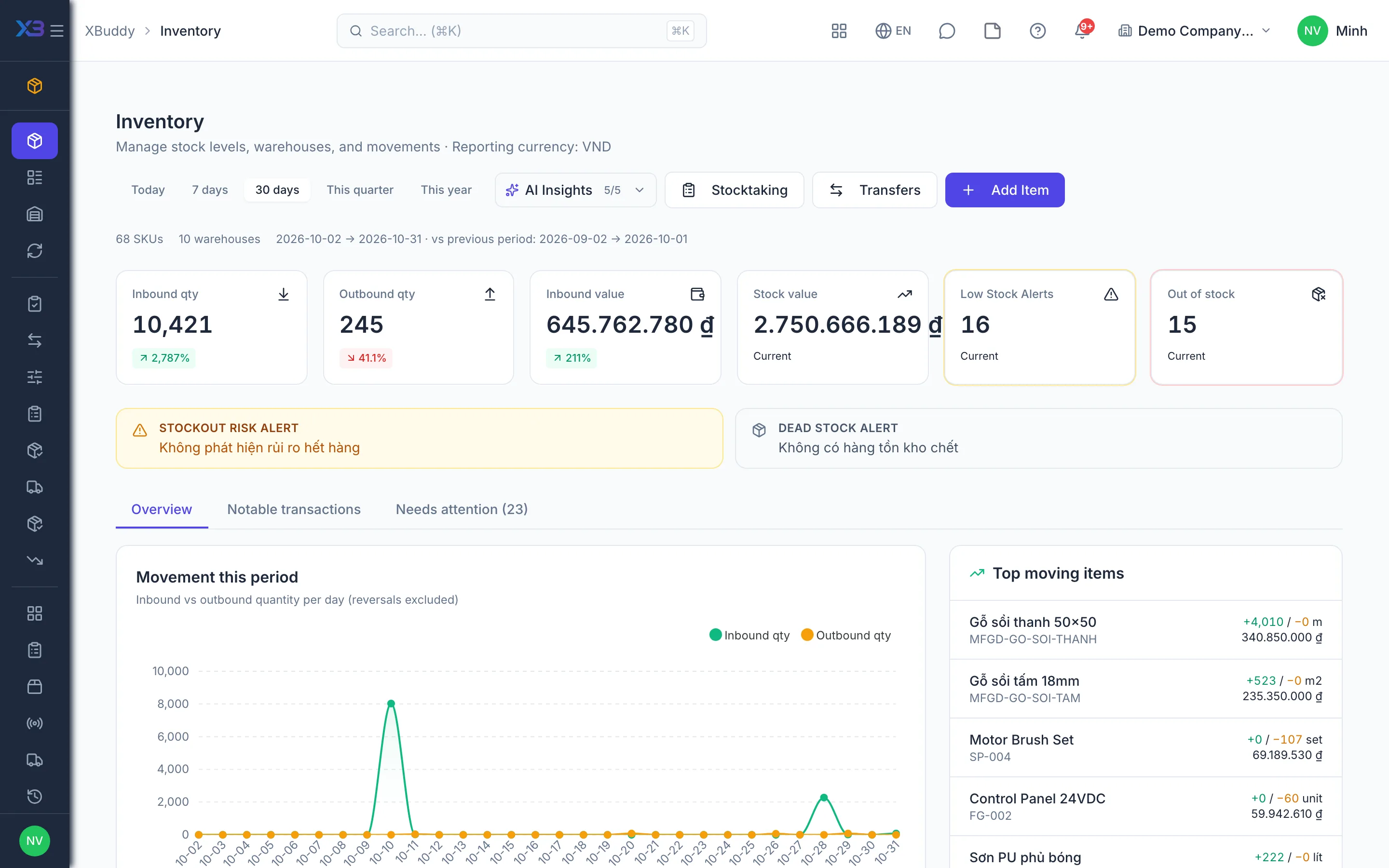
Key outcomes
- Stock matches the accounting books
- Know which lots expire, where serials are
- Reorder before you run out
Problems solved
- Stock ledger out of line with the books — Storekeepers record receipts and issues in spreadsheets while accounting posts from its own documents. At month end the two figures disagree, and nobody can point to the document that is missing its journal entry.
- No idea where goods are — Stock sits across several warehouses and bins, with some lots in transit between them. Expiring lots are found after sitting on the shelf too long, and warranty serials cannot be traced to the customer who received them.
- Stocktaking is a manual reconciliation — After counting, every line has to be checked against the system figure and stock corrected by hand. Differences are overwritten straight into the data, with no approver and no audit trail.
- Buying only once stock runs out — There is no reorder point per item, so buyers find out only when sales says an item is out. Some items are constantly short while others sit in overstock, tying up cash.
How it works
- Receive goods
- Inspect incoming goods
- Transfer between locations
- Pick, pack and ship
- Delivery and proof of delivery
- Periodic or cycle stocktakes
- Reorder
This is a summary. The full content, step screenshots and FAQ are on the original page.
Related operations guide: Storekeepers & warehouse managers