Field service & maintenance
Dispatch technicians, account for every bolt
From customer ticket to dispatch, van stock, on-site sign-off and invoice — every step reconciles with inventory and the books.
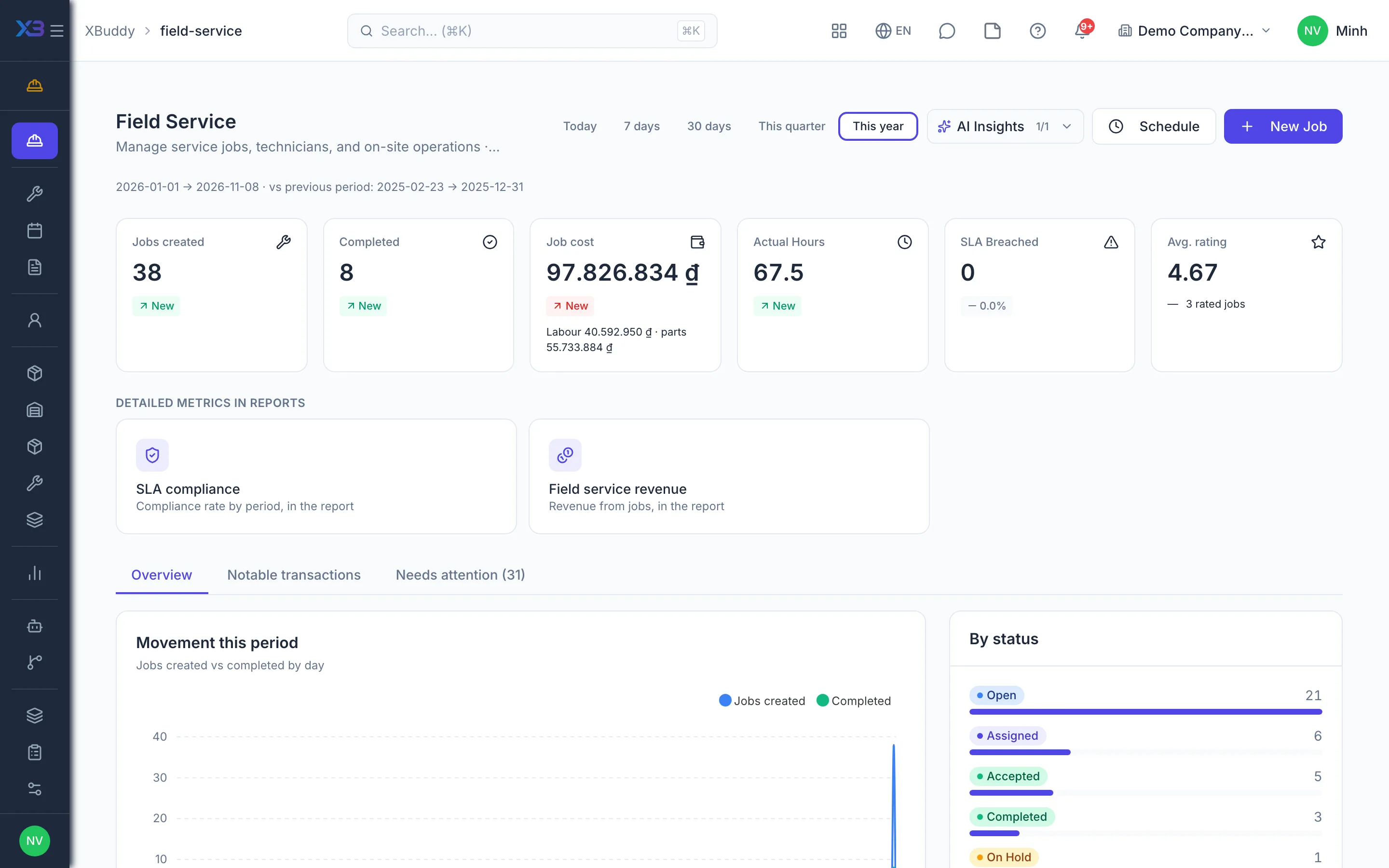
Key outcomes
- Right technician on the right job
- Every part issued on a slip, matching stock
- Job done means a draft invoice
Problems solved
- Work handed out over the phone — Customer requests arrive by phone call and chat message and are passed to technicians verbally. Nobody can see which jobs are waiting, who is on what, or which ones have already broken the commitment made to the customer.
- Parts leave the warehouse without a slip — Technicians take parts first and report later. By month end stock no longer matches the books, nobody can trace which part went to which job, and leftovers sit in someone’s van.
- Work done, never billed — Paper job sheets reach the office days late, and hours and parts have to be retyped to raise an invoice. Some jobs are finished and simply never billed.
- Internal and customer work mixed up — Repairing the company’s own machines and servicing customer equipment follow the same path. Internal maintenance is sometimes invoiced by mistake, and sometimes never reaches the right cost center.
How it works
- Take the request
- Create the job from a template
- Dispatch technicians
- Issue parts through the warehouse
- Maintain internal assets
- Sign off and invoice
This is a summary. The full content, step screenshots and FAQ are on the original page.
Related operations guide: Field service & maintenance