Transport & delivery
Every shipment has a route, a status and delivery proof
Shipments from sales orders, routes by area, in-transit status and exceptions, recipient signatures and carrier comparison — on shared sales and stock data.
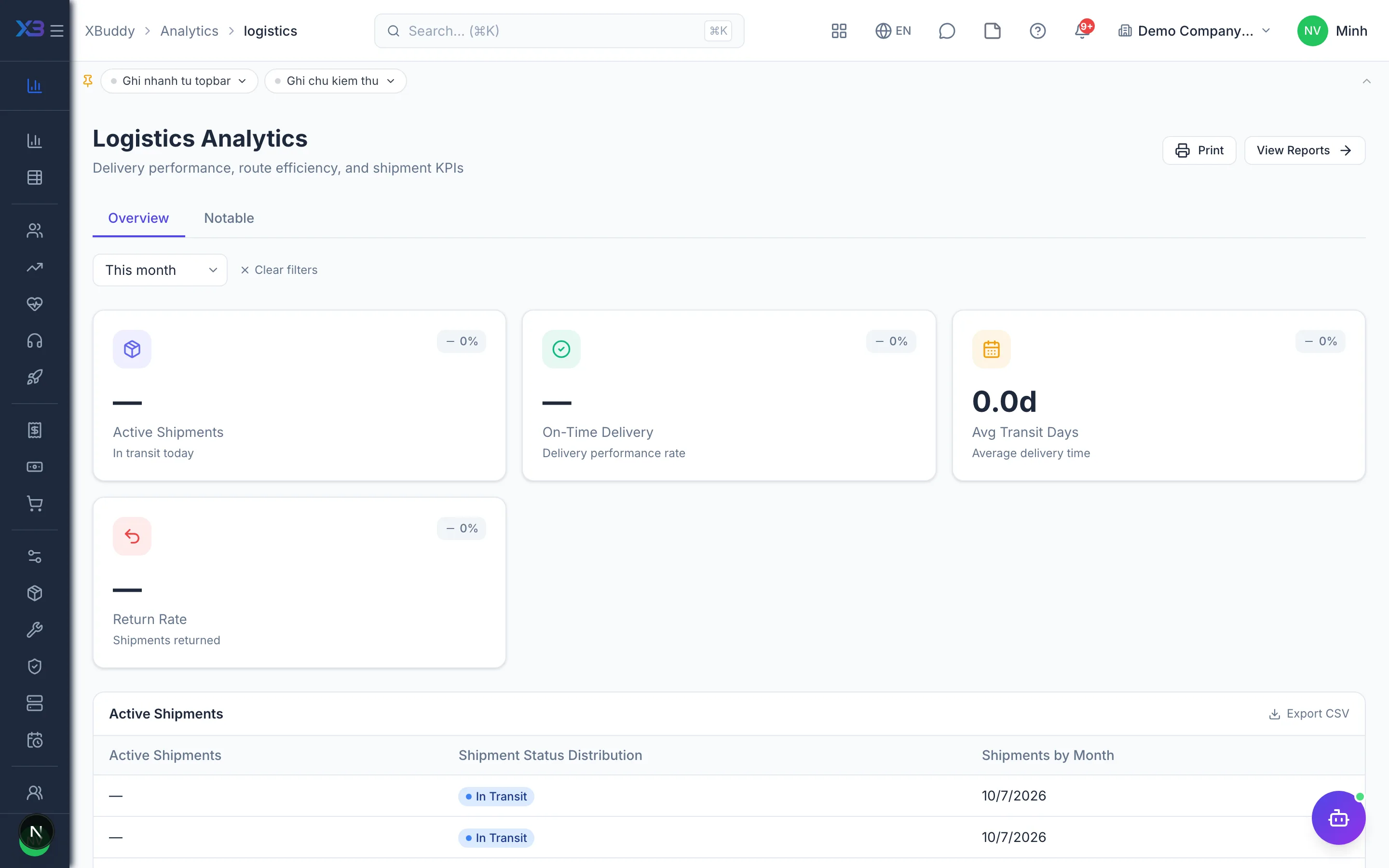
Key outcomes
- A completed sales order means a shipment
- Delivered always comes with a signature
- Carriers compared on on-time rate and cost
Problems solved
- Deliveries tracked in a group chat — Orders to deliver are pasted into the drivers’ chat and status comes back as messages. When a customer asks where the goods are, someone has to call each driver.
- No proof of delivery — The customer says nothing arrived and the company has no signature or photo to check. Failed attempts carry no reason, so they repeat next time.
- Returns nobody follows — A customer refuses the goods and they come back to the warehouse without any document. Returned quantities are never checked against the original invoice and nobody approves them.
- No idea which carrier is good — The company uses several carriers but has no on-time or cost-per-shipment figures. Switching carriers is a matter of gut feeling.
How it works
- Shipments from sales orders
- Packages and carrier
- Plan delivery routes
- Track in transit
- Proof of delivery
- Returns
- Carrier performance
This is a summary. The full content, step screenshots and FAQ are on the original page.
Related operations guide: Transport & delivery