Order to cash
Each document generated from the last, cash that matches the books
Quote, Sales Order, delivery, invoice and payment form one document chain: no retyping, no invoicing beyond what was delivered, entries posted automatically.
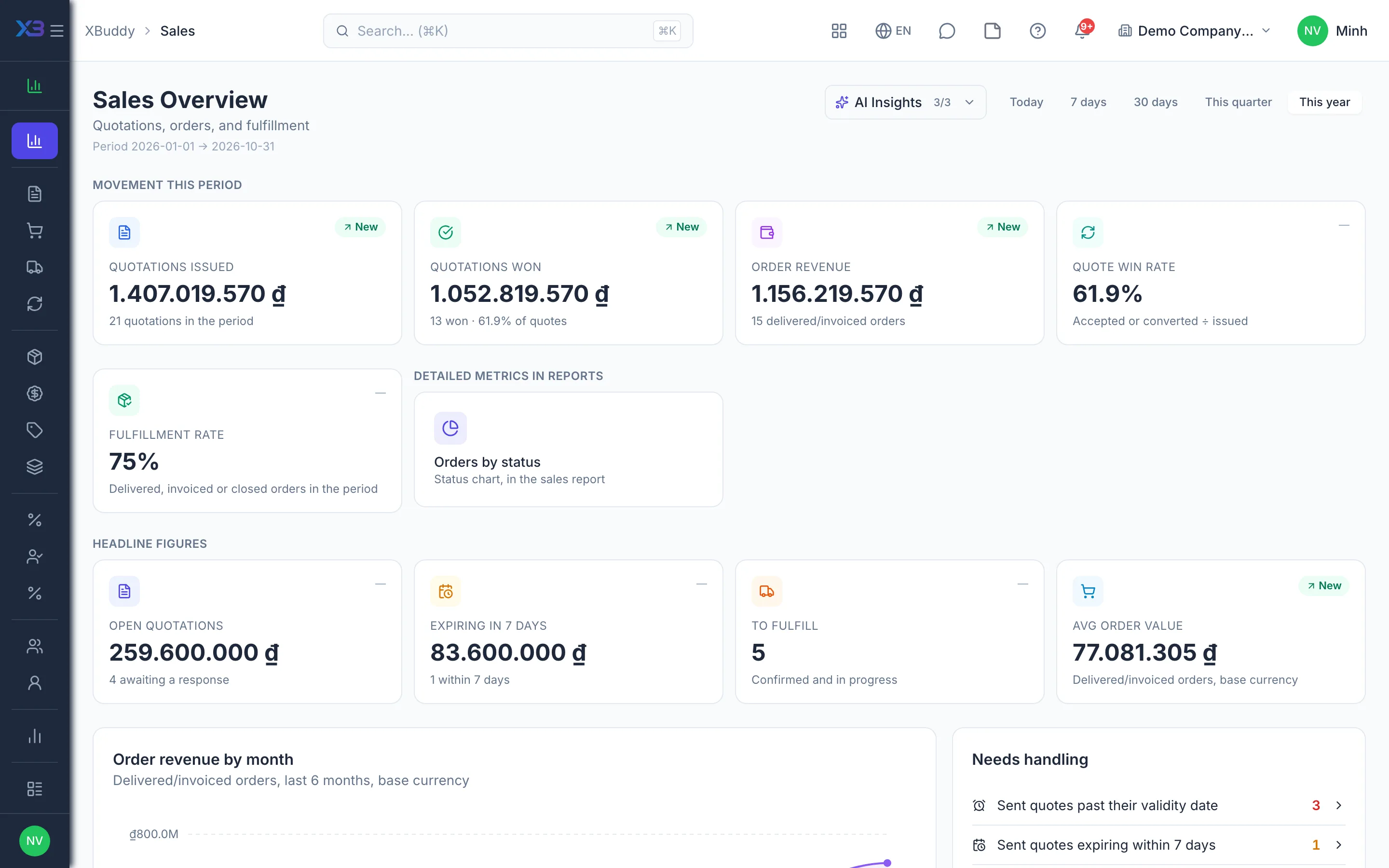
Key outcomes
- No retyping from quotation to invoice
- Invoices never exceed delivered quantities
- Aging and dunning from real data
Problems solved
- One order, typed in four times — Quotes are built in Excel, orders confirmed over chat, the warehouse writes its own issue slip and accounting retypes the invoice. Every re-entry is another chance to get the price, quantity or customer wrong.
- Delivered one thing, invoiced another — With partial deliveries or goods partly refused by the customer, accounting does not know exactly what was delivered. Invoices go out too high or too low, and disputes drag on because there is no handover record.
- Overdue customers spotted too late — Receivables aging is only compiled at month-end close. By then the debt is weeks overdue, and chasing it depends on each person’s memory.
- Books redone at month end — Revenue, cost of goods and receivables are posted by hand from sales documents. The sales report and the general ledger disagree, and reconciling them takes days.
How it works
- From Deal to quote
- Confirm the Sales Order
- Pick and pack
- Deliver with a full file
- Invoice
- Collect and chase
- Post and reconcile
This is a summary. The full content, step screenshots and FAQ are on the original page.
Related operations guide: Order to cash