Chief accountant
Close the books on time, without re-keying documents
Journal entries post automatically from sales, purchasing, stock and payroll. Accountants review exceptions, reconcile banks, lock periods and file returns.
Key outcomes
- Entries post the moment documents occur
- Checklist-driven close with visible blockers
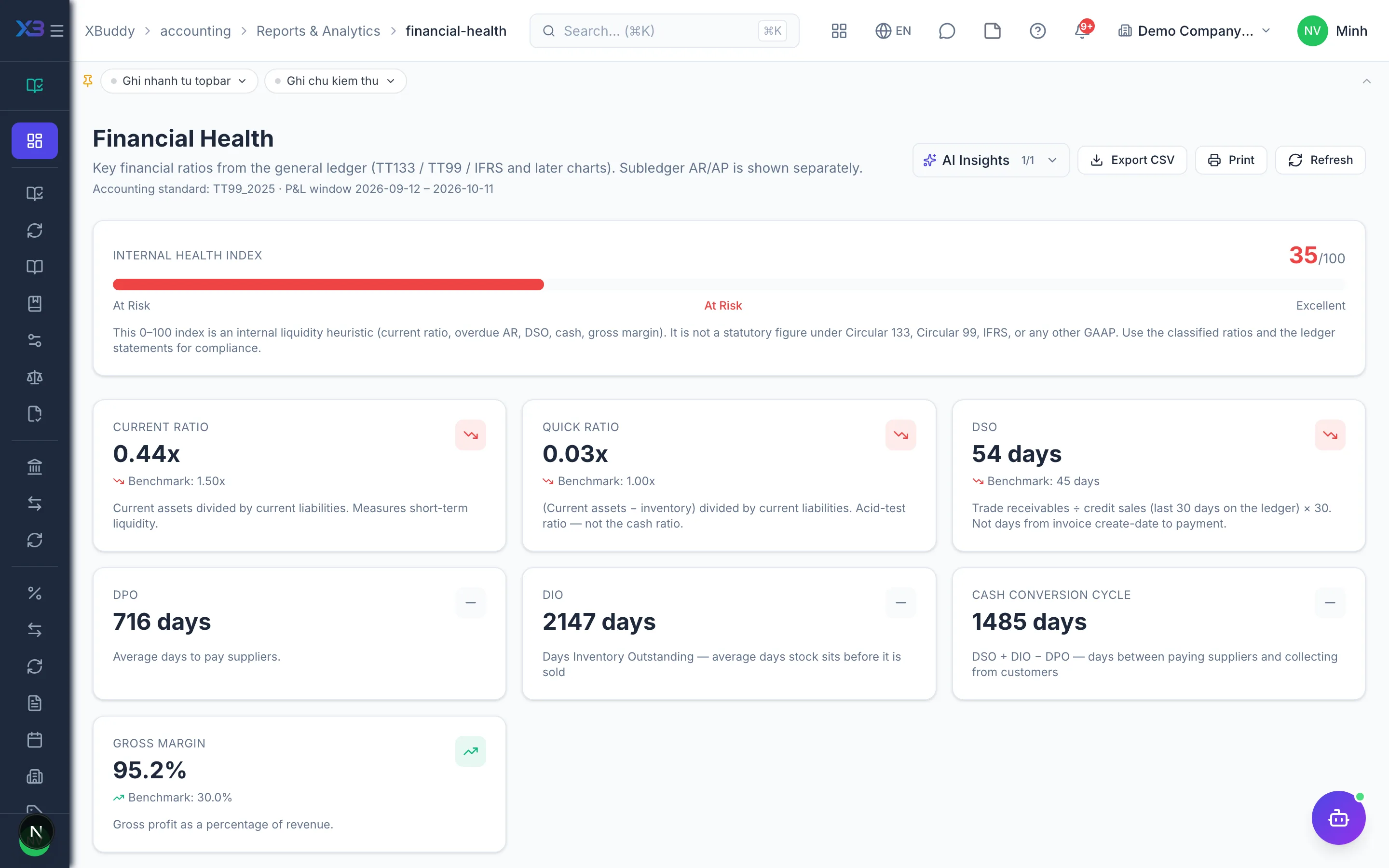
- Statements and VAT return built from the ledger
Problems solved
- Re-keying what another team already entered — Sales invoices, goods receipts, goods issues and payroll are produced in other software, then accountants post them again by hand. Every re-entry is another chance of a wrong amount, account or period.
- Subledgers that disagree with the GL — Receivables, stock and bank each show a different figure, and at month end someone checks line by line for the gap. The close drags on because nobody knows what is still outstanding.
- Voids that leave wrong traces — Invoices deleted or edited after posting leave orphaned entries, and someone still backdates into a period that has already been reported. The chief accountant answers for numbers they did not create.
- Tax returns detached from the books — Purchase and sales invoice listings are gathered from several files and the VAT return is prepared separately, so it is hard to tie back to the ledger. A supplementary return means starting over.
How it works
- Purchase matching
- Stock and cost of goods
- Receipts, payments and balances
- Bank reconciliation
- Period close
- Statements and returns
This is a summary. The full content, step screenshots and FAQ are on the original page.
Related operations guide: Chief accountant