Manufacturing companies
Shop floor, stock and costing books in one rhythm
Multi-level BOMs, MRP, work orders, shop floor, operation QC and period costing — every issue and report creates stock moves and journal entries.
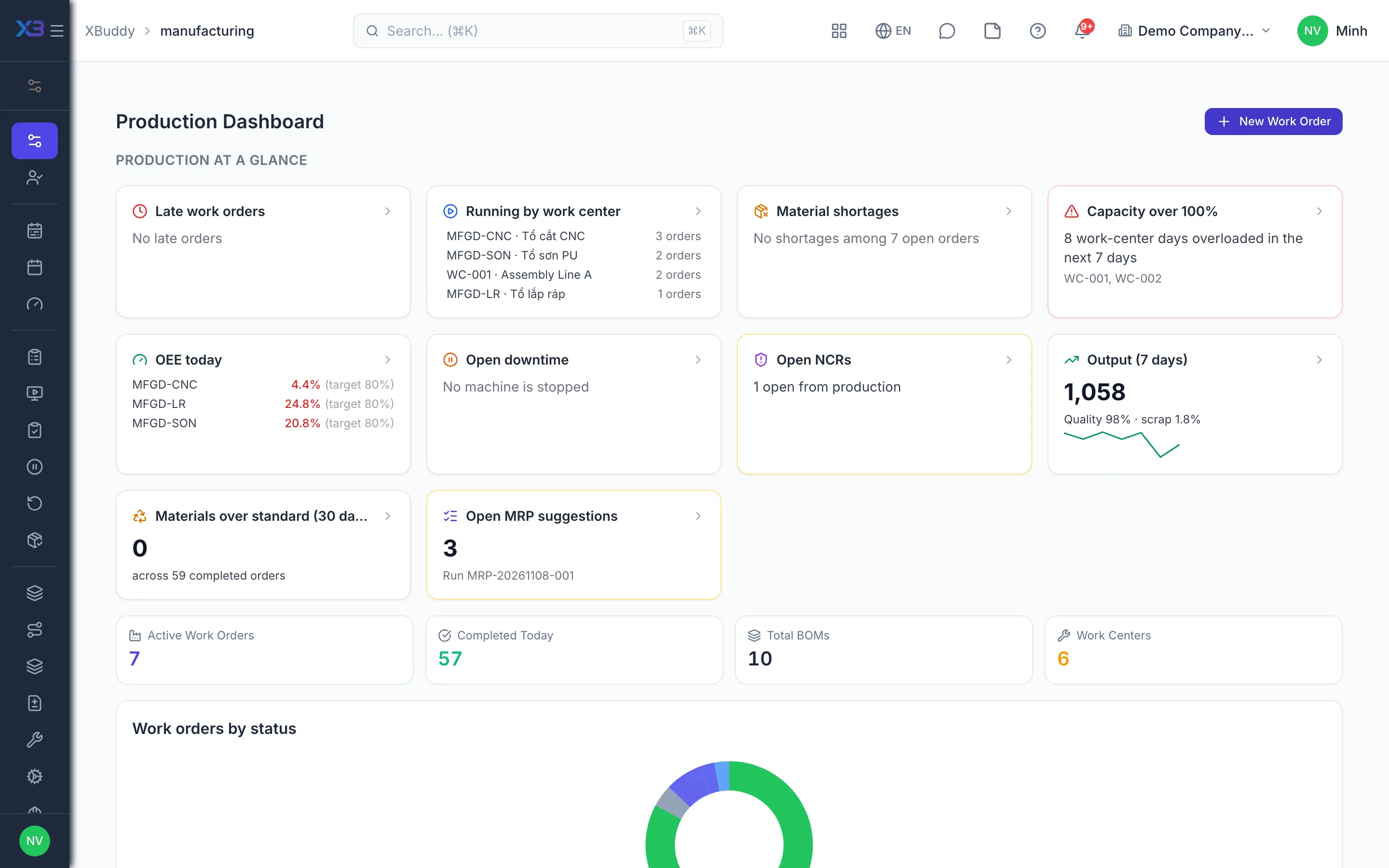
Key outcomes
- Know what to make and buy, and when
- Material and finished stock match the books
- Period costing without spreadsheets
Problems solved
- Recipes and orders live in spreadsheets — Bills of materials, work orders and stock slips are tracked across many Excel files. Change a recipe in one place and the others don’t follow, and nobody knows which version a running order is using.
- Shortages discovered too late — Work orders are released before anyone finds out the warehouse doesn’t have enough material. Purchasing runs on urgent phone calls while other items sit overstocked.
- No view of what the floor is doing — Which operation is in progress, which machine is down and why is known only through the shift leader. Actual minutes, defects and scrap are written on paper and reach the office late.
- Product cost out of line with the books — At month end, accounting collects figures from the floor and the warehouse to work out product cost by hand. Closing work in progress is a guess, and finished-goods receipt cost doesn’t match the costs actually incurred.
How it works
- Bills of materials and routings
- Production planning and MRP
- Purchase raw materials
- Work orders and material issue
- Shop floor
- Quality control
- Costing and posting
This is a summary. The full content, step screenshots and FAQ are on the original page.
Related operations guide: Manufacturing companies